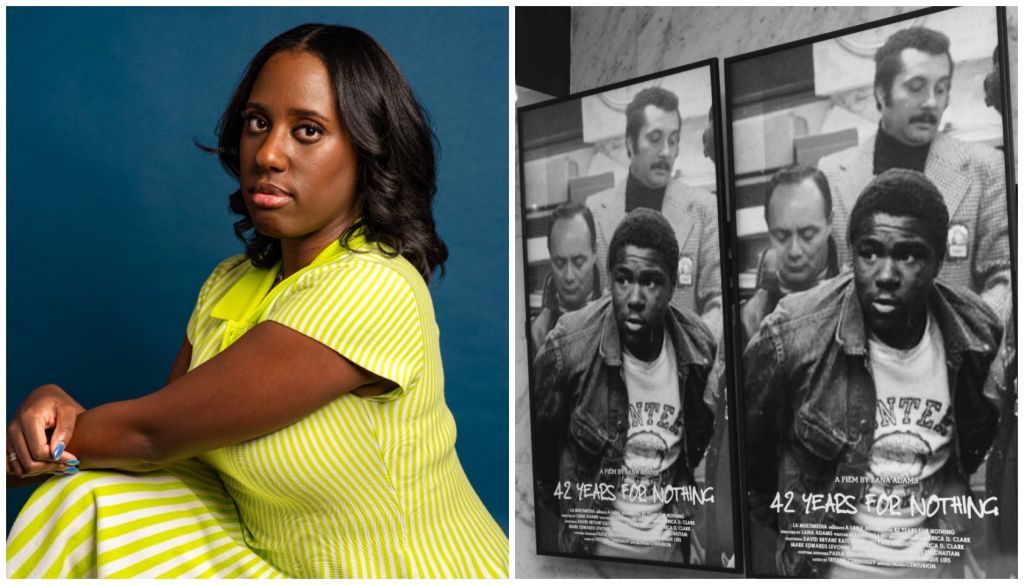
Wrongful conviction stories often end the moment someone walks out of prison. But for award-winning filmmaker Lana Adams, that was never enough.
Source: Courtesy of Lana Adams
With her documentary 42 Years for Nothing (now streaming on Apple TV and Prime Video), Adams wanted audiences to understand what freedom actually looks like after nearly four decades behind bars.
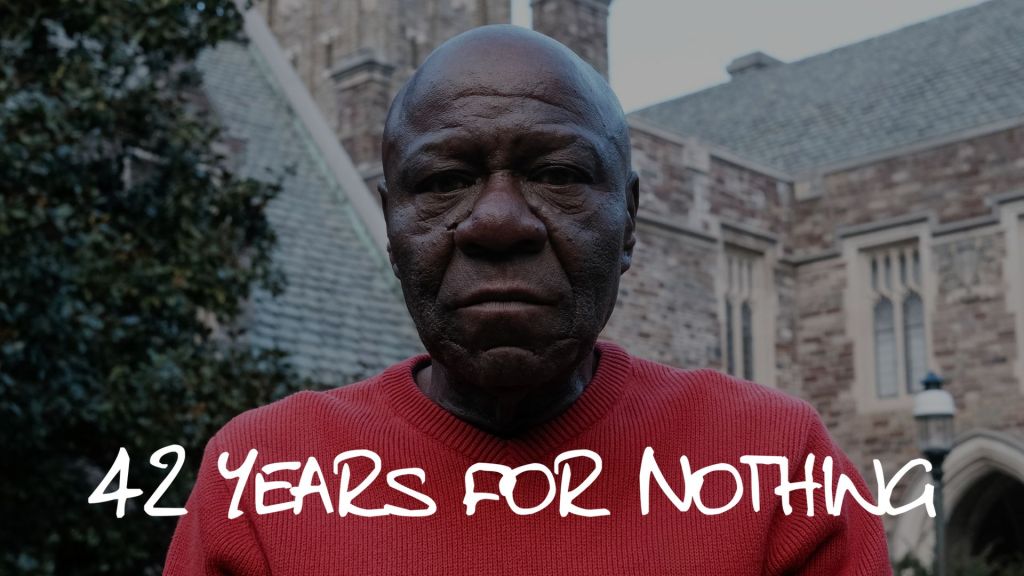
The film follows David Bryant, who spent 38 years in prison after being wrongfully convicted of the rape and murder of an 8-year-old girl. While maintaining his innocence throughout his incarceration, Bryant was eventually released with the help of the nonprofit organization Centurion. But as Adams explained during our conversation, his release marked the beginning of an entirely different journey.
A Chance Meeting Became A Years-Long Commitment
Adams told BOSSIP’s Lauryn Bass that she first met Bryant in 2019 after an entertainment attorney connected the two, knowing Bryant wanted to tell his story through film.
“Once I met him, I was like, ‘Oh, I will do anything for this man,’” Adams recalled. “He’s just the greatest spirit. If you see the film and you see what he went through, it’s really hard to believe that he has such a positive attitude.”
Although Adams initially created a brief proof-of-concept video, she admitted it barely scratched the surface because Bryant’s legal settlement was still pending and much of the case could not yet be explored.
“I just did that to give him a little taste,” she said. “He told me, ‘When I can, I’m coming back, and I’m going to have you tell my story.’ And he did.”
What began as a short concept eventually evolved into a 40-minute documentary after Adams realized Bryant’s experience deserved a much larger platform.
Why The Story Didn’t End With Freedom
Rather than centering solely on Bryant’s legal battle, Adams intentionally focused much of the documentary on life after incarceration.
Source: 42 Years For Nothing / 42 Years For Nothing
“That’s where you really see the impact of the years inside,” she explained. “Who have you become after something like that?”
Bryant entered prison at just 17 years old and was released in his late 50s, forcing him to rebuild his identity, relationships, and understanding of the world after nearly four decades.
“I wanted to show just how drastically his life changed and how difficult adjusting to a new normal can be,” Adams said. “So many people experience that, whether they’re exonerees or not.”
Protecting David Bryant’s Story Every Step Of The Way
Building trust with Bryant became one of Adams’ biggest priorities throughout production.
“I was so protective of him and still am,” she shared. “Every time I needed to ask about something painful, it honestly hurt me to even make that phone call.”
To avoid forcing Bryant to repeatedly relive traumatic experiences, Adams carefully organized her interviews.
“I wanted to ask everything one time so we didn’t have to keep reopening those wounds,” she said.
The filmmaker also faced unexpected production challenges. Many individuals connected to Bryant’s original case had passed away, while others declined to participate.
“As a result, we had to get creative with the storytelling,” Adams explained, pointing to the documentary’s use of animation to help reconstruct portions of the narrative.
The Lasting Weight Of “Nothing”
The documentary’s title carries a meaning that Adams says extends far beyond its literal wording.
“The word ‘nothing’ is actually very heavy,” she said.
Bryant’s decades behind bars were anything but empty. They were filled with isolation, violence, bullying, and surviving a system that ultimately imprisoned an innocent man.
“He did nothing to deserve it,” Adams said. “Forty-two years is a lifetime for something you didn’t do.”
A Story That Continues Beyond Prison Walls
Although Bryant is free, Adams revealed that incarceration continues to affect his health today.
“Part of the reason David isn’t here [for the interview] today is because of the health complications he has now,” she said. “From not getting proper care for his heart and other injuries while he was incarcerated, you see the impact now. Yes, you’re out of prison, but you’re kind of not.”
Turning Awareness Into Action
One of the most rewarding parts of the documentary’s festival run has been seeing audiences ask how they can help.
“David’s only request was that people know his story and that it inspires them,” Adams said. “Every time someone watches it, that job gets done.”
She encourages viewers looking to make a difference to support organizations like Centurion, the nonprofit that helped secure Bryant’s release after decades of wrongful imprisonment.
“They’re reading letters every day. They’re doing the research every day for people who are wrongfully accused,” Adams said. “Sometimes we think these issues are too big, but everybody can do something.”
Following The Whisper
While continuing to promote 42 Years for Nothing, Adams is already looking ahead to future projects. That includes a comedy pilot and a documentary series exploring Black women’s reproductive health through her own experience living with endometriosis.
For aspiring filmmakers hoping to create meaningful work, her advice is simple.
“Listen to that whisper,” Adams said. “We all have one that’s telling us the story we need to tell. Don’t ignore it. No one’s going to tell that story the way you do, and do the work. Practice your craft every single day, even if it’s only for five or ten minutes.”
With 42 Years for Nothing, Adams has created more than a documentary about one man’s wrongful conviction. She has crafted a conversation about justice, healing, and the lifelong impact of systemic failure. One she hopes continues long after the credits roll.