The Big 'Beautiful' Bill: 1 Year Later With Lenny McAllister
The Big 'Beautiful' Bill: 1 Year Later With Lenny McAllister
- Writer and political commentator Lenny McAllister spoke to NewsOne about his perspective on The Big Beautiful Bill and the work still ahead.
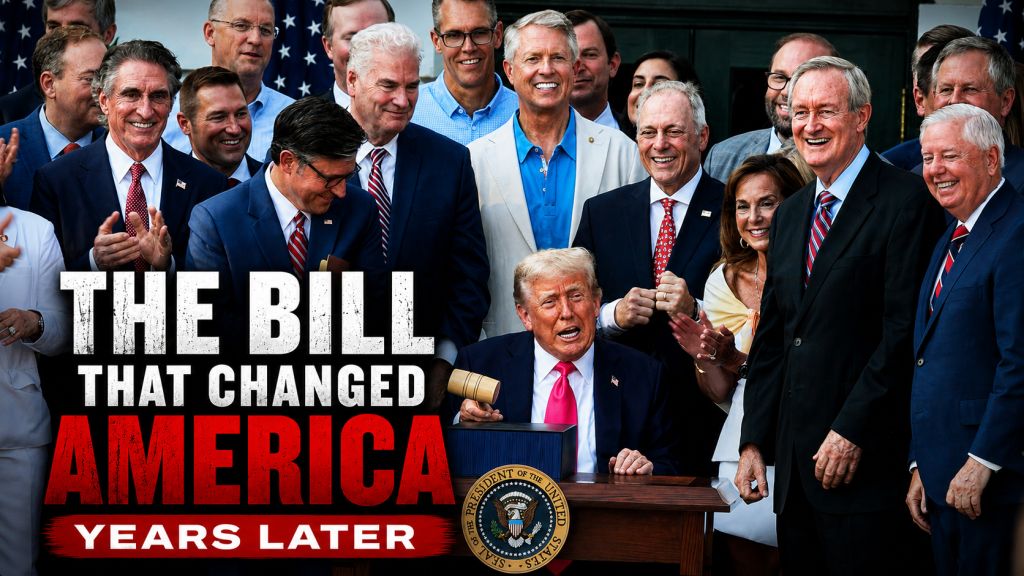
A year has passed since President Donald Trump signed the One Big Beautiful Bill Act (H.R. 1) into law on July 3, 2025, promising to strengthen the American economy and lower costs for working families. Supporters argued the sweeping legislation would build on the nation’s post-pandemic recovery by reducing taxes, making health care and higher education more affordable, and creating new economic opportunities.
But one year later, critics say the law has instead widened economic inequality while cutting programs millions of Americans rely on. NewsOne spoke with Lenny McAllister, author of A Venn Diagram of One: An American Story, about the bill’s impact.
McAllister believes the legislation has largely benefited wealthier Americans while leaving “those on the periphery of society, those that need the extra boost to get back into the fold here in America” behind.
Medicaid & SNAP Cuts Raise Concerns
One of the most controversial parts of the legislation is its reduction in federal Medicaid spending. The law cuts more than $1 trillion from the program over the next decade, with projections showing millions of Americans could lose health insurance coverage.
The legislation also made significant changes to the Supplemental Nutrition Assistance Program (SNAP), raising the work requirement age for non-disabled adults without dependents from 54 to 64 while eliminating several exemptions, including those previously available to veterans and people experiencing homelessness. Federal SNAP spending is expected to be reduced by approximately $186 billion over 10 years through changes to benefits and eligibility. Critics argue those cuts will disproportionately affect Black families.
For Black birthing women, it could be a death sentence. As NewsOne’s Josie Pickens noted, more than 65% of Black births are covered by Medicaid, yet Black women remain three times more likely than white women to die from pregnancy-related causes. That reduced access to prenatal care and other medical services could worsen already stark maternal health disparities.
Black communities also experience disproportionately high rates of chronic illnesses, including diabetes and several forms of cancer, making access to affordable health care even more critical.
Lenny McAllister believes lawmakers should be focused on reducing the actual cost of care through legislative reform instead of limiting access.
“What we need to work on legislatively and within a leadership context is bringing down health care costs. We continue to try to expand healthcare accessibility without addressing costs,” he explained, adding that people are still struggling financially, even if they have insurance, because they “still have high premiums that they have to deal with.”
He added, “unfortunately, what we’re seeing is that those that have well-paying corporate jobs don’t feel the pinch quite the same way as the individual that’s putting together two part-time jobs to make it a full-time job, while they also have to go into the marketplace to buy health insurance.”
Student Borrowers Face New Challenges
Education was another area significantly affected by the legislation. Our very own Dr. Stacey Patton noted that the bill reduces billions in federal education funding, places new limits on student borrowing, eliminates the SAVE income-driven repayment plan, and ties some institutional funding to graduates’ earnings. For many borrowers, the changes could mean higher monthly loan payments and fewer repayment options. The impact may be especially significant for Black students, who already carry disproportionately high levels of student debt.
Just as Black enrollment in colleges and graduate programs has more than doubled over the past several decades, the cost of earning a degree has continued to climb. In 1976, Black students represented about 9% of undergraduates nationwide. By the mid-2010s, that figure had increased to roughly 14%-15%, with enrollment growing from approximately 900,000 students to more than 2 million.
At the same time, rising tuition costs and expanding student loan debt have made higher education increasingly unaffordable, raising concerns that the bill could further limit economic mobility for future generations.
Was the Bill’s Goal Achieved? Here’s what Lenny McAllister thinks.
McAllister believes lawmakers intended to reduce government spending but says the approach ultimately undermines industries the country desperately needs.
“I think the primary goal for lawmakers that passed the Big Beautiful Bill in July of 2025 was to try to decrease costs, but it was narrow-minded, because they got rid of some of the eligibilities for the very industries that we need, including the medical industry,” Lenny McAllister told NewsOne.
“If you have a scarcity of doctors, just the economy of scale shows you that prices are going to go up. We need more doctors, we need more scientists, we need more nurses, we need more medical professionals, and the way to encourage people to go into the fold — people from [the] working class and middle class America — is not to block their way to pay for school. This was a mistake in that bill.”
As the debate over the legislation continues one year after its passage, its supporters point to tax relief and economic growth, while critics argue the long-term costs will be borne by the nation’s most vulnerable communities. For many Americans, the question remains whether the promised economic benefits outweigh the cuts to health care, nutrition assistance and higher education that millions depend on.
What are your thoughts on the Big Beautiful Bill one year later?
SEE MORE:
Trump’s ‘Big, Beautiful Bill’ Will Destroy Medicare, Food Stamps
Civil Rights Leaders Publicly Condemn Trump’s ‘Big Ugly Bill’
The Big 'Beautiful' Bill: 1 Year Later With Lenny McAllister was originally published on newsone.com