Free Speech In ‘America’ Has Never Belonged To Black People
Free Speech In ‘America’ Has Never Fully Belonged To Black People
Free speech in America has never fully belonged to Black Americans. The tools used to silence us have changed in how they appear over time, but the logic underneath them hasn’t.
In 1740, the South Carolina Negro Act codified white supremacy and made it a crime to teach an enslaved Black person how to read or write.
In 1898, a white mob in Wilmington, North Carolina, burned the offices of the Daily Record, the most prominent Black-owned newspaper in the state after it had published an editorial that openly challenged white supremacist narratives.
In the 1960s, the FBI’s COINTELPRO program surveilled, infiltrated, and summarily worked to discredit Black authors and journalists even as they tried to coerce them into spying on Black activist groups like the Black Panthers.
In the last several years, newsroom layoffs have landed disproportionately on Black journalists, and some of the most visible Black voices in television news, including Joy-Ann Reid, Tiffany Cross and Don Lemon, have left legacy media for solo ventures after their networks pushed them out. The displacement of Black journalists from legacy newsrooms with tremendous reach has been mirrored by the treatment Black voices have received on platforms that are increasingly being used to fill the gap their departures have created.
Some of the tools used to silence us now increasingly exist online on social media platforms whose algorithms are engineered to amplify some voices and suppress others. Peer reviewed research has documented that content moderation algorithms remove posts and suspend accounts belonging to Black users at disproportionate rates, often under the banner of community guidelines social media companies say exist to keep us safe.
To be a Black journalist who reports on race, who critiques systems of power and controversial but popular figures is to know that pushback, especially online, is almost guaranteed. When I’ve written articles or done investigations that call powerful people or institutions to account, people coming out of the woodwork to make sure I know they are displeased has always been part of the work. It’s also the point of the work. I write to strike a chord and shift how readers engage with an issue. When my writing is nudging people to consider broadening how they see an issue or unearths a hidden truth, somebody is bound to be upset and vocal about it.
I was reminded of as much Monday. I’d written a piece about WNBA Fever player Caitlin Clark sharing a stage with country singer Morgan Wallen, and I posted a link to it on Meta’s Threads platform. As the post gained traction, Threads abruptly removed it. The platform stated that my post violated community standards because it “may help arrange or encourage sexual activities.”
Neither my post nor the reported piece contained a single mention of sexual activity, and neither delved into the romantic lives of anyone mentioned in the article.
I’ve reported regularly on how a contingent of Clark’s fans have consistently gone after Black women players in the league. The pattern has become mind-numbingly predictable. Clark has an on-court run-in with a Black woman player; her fans cast her as the wronged party and pile on the Black woman player online. Clark refuses to correct them, and so the online racial tirades continue.
When I’ve promoted those articles on social media, I’ve routinely been on the receiving end of vitriol from those same fans who treat any criticism of Clark, her fans, her team, or the league’s failure to protect Black women players as a personal injury.
This was the first time that, as a result of my reporting on Clark, a social media platform censored my account and removed one of my posts, falsely attributing the removal to a nonexistent violation of community standards.
After sharing my experiences on my Threads page, I heard from a number of other users, both publicly and privately, describing similar experiences after posting content or replies critical of Clark. Some told me the platform had offered little protection when users spew racial epithets in their comments or DMs.
One Threads content creator I spoke to is a basketball skills trainer and licensed basketball coach through USA Basketball. He regularly posts videos analyzing Clark’s on-court skills and those of other WNBA players. He shared with me multiple DMs laden with the racial epithets he’s received after posting content critiquing Clark’s technical skills during games. One read, “How do you wake up every day being this dumb of a ni**er?” His only recourse is to block each DM and report the user. Meanwhile, the Threads accounts of the users who sent the DMs remain active.
NewsOne reached out to Thread’s parent company, Meta, for comment on the removal of my post, on the experiences shared by other users who have faced similar moderation issues after posting content critical of Clark, and on the platform’s handling of DMs containing racial epithets directed at select users. Meta did not respond by the time of publication.
Several hours after I’d reached out to Meta directly and posted several times on my account asking for a reversal of their decision, my original post magically reappeared. The lock on my account was lifted at the same time. I received no message from the platform explaining the reversal, no acknowledgment that the original takedown had been a mistake, and no indication of what, if anything, had changed their minds.
I have no illusions about why my post may have come back. I am a working journalist actively reporting on a story about the platform that censored me. That context could have shaped the outcome in a way it didn’t for other users I spoke with yesterday who don’t have a byline to leverage, a publication backing them, or a story in motion that the platform has a vested interest in seeing resolved quickly and quietly.
What happened to my post matters because it speaks to a much broader issue of press censorship at a moment when freedom of speech and expression in this country is increasingly under attack.
Earlier this month, we marked World Press Freedom Day just as major news outlets are operating under increased pressure to avoid challenging the current administration or its policies.
The Trump White House has openly threatened the broadcast licenses of networks whose coverage it doesn’t like, with networks like ABC taking some of the most direct fire. The attacks prove the federal government is willing to use the FCC as a cudgel against editorial decisions it dislikes.
What happened to my post on a Meta-owned platform is another manifestation of the same problem. In this case, the cudgel was outsourced to a faulty algorithm easily duped by a committed group of online trolls.
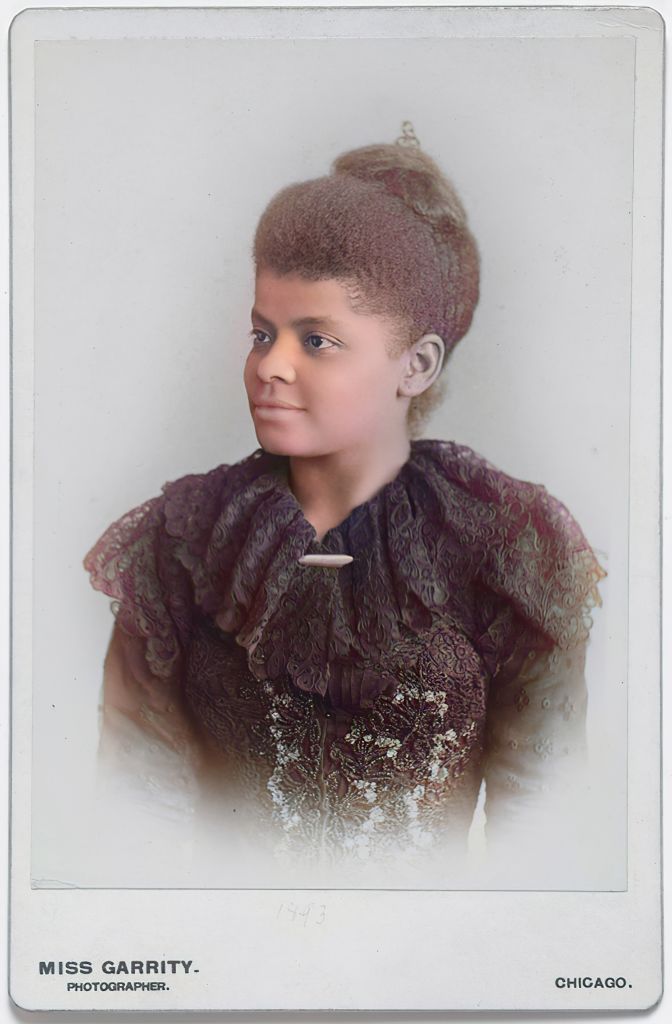
The suppression of Black voices across platforms and in different pockets of American life is one of the oldest and most predictable of American traditions. It’s something that Ida B. Wells, one of the most consequential investigative journalists this country has ever produced, knew instinctively.
Wells worked as an investigative journalist during a time in this country when telling the truth and reporting about what was happening to Black people in the South made you a target. She wrote about the brutality of lynching, the horrid conditions in Black schools in Memphis, and about her experience being ordered to give up her seat in the first-class ladies’ car on a train. As a result of her tenacious reporting, her printing press was destroyed. She received numerous death threats, and she was ultimately forced to flee Memphis.
All were attempts at suppressing the stories she was unearthing about what it meant to be a Black person in an America that was still nearly a century away from enacting civil rights legislation that would guarantee Black citizens basic human rights.
Back then, the tools of choice were white mobs and mainstream press outlets that rarely hired Black reporters or editors. Black press outlets, then, like now, were often smaller in size and reach, underresourced, and maligned.
Now, the mechanisms used to suppress free speech and censor Black journalists and content creators are most often found in content moderation algorithms and coordinated reporting campaigns on social media platforms
The relationship between Black people and the white-dominated mainstream American press has been rocky for as long as the two have crossed paths. Mainstream outlets, when they do cover Black communities, have covered us as a problem, a threat, or as background scenery in white stories. Black press outlets, from the Chicago Defender to Jet to this very publication, exist because the lack of Black-led and informed coverage of our communities continued to widen.
The work of telling Black stories accurately has mostly been done by Black journalists, because we understand our communities intimately and can capture the nuance and provide the context that explains what those stories mean both in and outside of the larger white-dominated media landscape.
Several years ago, I wrote about the importance of diversity in journalism in an article that appeared in the Harvard Nieman Lab. The point I made then is the same one I’d make today. Newsrooms covering communities without Black journalists across their ranks produce coverage that miss the mark consistently, and in predictable ways. When journalists do wade into reporting that requires investigative work or reporting on race or exposing inequities, we are increasingly becoming targets.
I’ve seen this firsthand.
I’ve spent most of my career in newsroom leadership at companies ranging from NBC News to NPR. What I’ve witnessed my reporters subjected to rises above mere editorial disagreement. The threats we receive are often graphic. I know and have worked with reporters whose inboxes have been filled with emails laced with misogynist, homophobic, and racial epithets. They have received death threats, have been doxxed, and others who have been swatted. The harassment has landed hardest on women, on LGBTQ reporters, on people of color, and hardest of all on Black women.
And now, a new technology-driven iteration of the playbook used to chase Ida B. Wells out of Memphis is being used in 2026 on Black journalists and content creators on our favorite social media platforms.
I became a journalist for two reasons. To give voice to the voiceless and to hold those in power to account. As a Black Queer woman who is a former foster kid, I understood instinctively, and at a fairly young age, what it meant to be a member of multiple underrepresented groups whose voices are often ignored and maligned. My goal then and now has been to give voice to people who traditionally haven’t had one or who have seen their stories rewritten by people who don’t look like them. In the era we currently find ourselves in, that approach has become controversial and a revolutionary act.
The best journalists I’ve known, the ones I’ve modeled my work after, have been fearless and relentless in their pursuit of the truth, and equally committed to making that truth accessible to the people who need it the most.
Black WNBA fans had clocked Caitlin Clark long before any of my reporting on her was published. Most of the racism in this country doesn’t arrive as a slur shouted in public or captured on tape. It shows up in the subtleties, and when Black people name it, we are too often forced into exhausting debates about whether what we saw or experienced was racism at all, or we are accused of being too sensitive and making everything about race. I point out the pattern, explain why it qualifies as racism, and I show how the same dynamic often plays out in other areas of our lives as Black people. My reporting and my goal is to be a resource for readers when they experience those moments in their daily lives.
There’s an old quote attributed to former President Lyndon B. Johnson, where he said, “If you can convince the lowest white man he is better than the best Black man, he won’t notice you’re picking his pocket. Give him something to look down on, and he’ll empty his pockets for you willingly.” That ethos is very much alive in American politics, and it has also seeped into pockets of WNBA fandom.
Most of the Clark fans who show up in my mentions haven’t read my full piece. Even fewer possess a basic knowledge of women’s basketball. They show up to a headline carrying this Black woman’s byline and a critique of their favorite basketball player, and are unhinged by that combination alone. Critical thought and a capacity for healthy intellectual debate or dialogue are usually absent in their responses. So when Threads pulled my post because a contingent of those fans took issue with my article, I immediately recognized what was happening.
Ida B. Wells once said, “The way to right wrongs is to turn the light of truth upon them.” And history has shown us that free speech in America has never been spread evenly. The people screaming the loudest about free speech usually have the most of it. The rest of us remain clear-eyed, full of resolve, and we keep writing anyway.
SEE ALSO:
The WNBA’s New CBA Is Changing The Math On Motherhood For Players
WNBA: Free Raven Johnson, Or At Least Protect Her
Free Speech In ‘America’ Has Never Fully Belonged To Black People was originally published on newsone.com